Best Upholstered Arm Chair Manufacturers in China?

Choosing the best upholstered arm chair manufacturers in China requires more than comparing catalog photos or factory prices. The category serves homes, hotels, offices, and commercial interiors, where comfort must meet durability and consistent production. Grand View Research valued the global furniture market at USD 736.6 billion in 2023 and projected continued growth through 2030. That scale creates opportunity. It also makes careful supplier evaluation essential.

China remains a major furniture manufacturing base, but national output figures cannot verify an individual factory’s workmanship. The National Bureau of Statistics of China reported 2023 revenue of 655.7 billion yuan for the country’s furniture manufacturing industry. This figure offers useful context, not a quality guarantee. Buyers should examine frame construction, foam density, fabric specifications, stitching, finishing, and packaging. Ask for current product samples and production details. Small checks matter.

This guide compares manufacturers through practical criteria: product range, customization, quality-control procedures, export experience, and communication. It also highlights questions buyers can ask before requesting a quotation or placing an order. A polished showroom sample may not represent every production run; that distinction is easy to overlook. I would not treat export volume as proof of craftsmanship. Instead, verify claims with documentation, clear specifications, and repeatable inspection steps. The right partner should explain what can be customized, what affects lead times, and how defects are handled. Those details often reveal more than a low headline price.
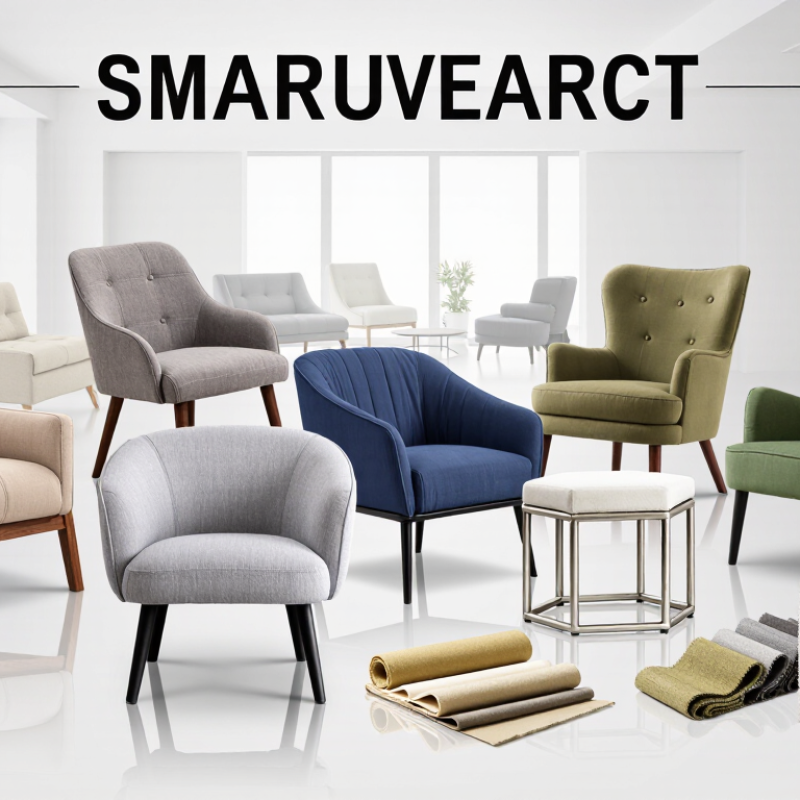
Best Upholstered Arm Chair Manufacturers in China?

Understanding Upholstered Arm Chairs and Their Main Types

Upholstered arm chairs combine a supportive frame, padded seat and back, and arms covered in fabric or leather. Their comfort depends on more than softness. Seat depth, arm height, cushion density, and fabric tension all affect how the chair feels after regular use. Small details matter.

A tight-back chair has a fixed upholstered back, giving it a neat profile and fewer loose cushions to adjust. Loose-back designs use removable cushions, which can be turned or replaced, though they may need frequent straightening. Wingback chairs have raised side panels that frame the head and shoulders; they suit reading corners but can feel enclosed in small rooms. Club chairs usually feature rounded arms and a deep seat, while barrel chairs curve around the sitter with a compact, continuous back.

For buyers comparing manufacturers in China, ask for clear dimensions, frame and filling specifications, and fabric rub-test information. A sample chair can reveal uneven seams, hard edges, or cushions that recover slowly after pressure. Photos cannot show everything. A plush chair may look inviting yet offer poor support, and that trade-off is easy to miss when judging only by appearance.
How to Evaluate Chinese Upholstered Arm Chair Manufacturers

Choosing a Chinese upholstered arm chair manufacturer takes more than comparing prices and showroom photos. Ask for a drawing with overall dimensions, seat height, cushion depth, and fabric specifications. These details help prevent a chair that looks right online but feels cramped in person. Request a sample or a finished production piece when possible. Check the seams, fabric tension, cushion recovery, and how firmly the legs meet the frame. Small flaws matter.

Evaluate the factory’s process, not just its catalog. Ask how it checks frame joints, upholstery alignment, and color consistency between batches. A reliable supplier should explain materials clearly and provide written specifications for the order. Discuss packaging, lead times, and how defects are recorded before production begins. Vague answers are a warning sign, though one imperfect email alone proves little. It is easy to overlook this distinction when deadlines feel tight.

Tips: Send the same checklist to each manufacturer. Compare sample quality, response accuracy, and documented inspection steps—not price alone. Ask for references from similar orders, and confirm that the quoted fabric and dimensions match the sample. Keep the comparison simple. A tidy showroom is useful, but it cannot replace a close look at stitching and construction.

How to Evaluate Chinese Upholstered Arm Chair Manufacturers

Suggested weighting for a buyer-defined supplier assessment. These percentages are an evaluation framework, not measured industry statistics; adjust them to match your product and sourcing priorities.

Leading Upholstered Arm Chair Manufacturers in China

China’s leading upholstered arm chair manufacturers are distinguished by repeatable construction, not polished showroom photos alone. Buyers should request frame specifications, foam density, fabric abrasion results, and written inspection procedures. Check the underside: clean joints, even staples, and securely attached webbing reveal more than a staged product image. Details matter.

Grand View Research estimated the global upholstered furniture market at about US$58.3 billion in 2023, with projected annual growth of 5.3% from 2024 to 2030. China’s National Furniture Association, using 2023 industry statistics, reported roughly RMB 655.7 billion in revenue among furniture manufacturers above designated size. These figures point to a broad, competitive supply base, but they do not prove that any individual factory meets a buyer’s requirements.

For sourcing, compare samples against approved production, then inspect finished chairs for cushion recovery, seam alignment, and frame stability. Ask how material substitutions are recorded and how defects are handled. A factory may show impressive equipment yet struggle with consistent finishing across a large order. That gap is easy to miss. Independent testing and a documented pre-shipment inspection can reduce uncertainty, though neither replaces clear specifications agreed before production.

Comparing Manufacturing Capabilities, Materials, and Customization

Choosing an upholstered arm chair manufacturer in China takes more than comparing catalog photos. Check how the factory controls frame construction, foam selection, upholstery cutting, and final inspection. Ask whether frames use kiln-dried hardwood, plywood, or a documented combination. For comfort, request foam density and suspension details, such as webbing or sinuous springs. These specifications make comparisons more useful than vague claims about “premium quality.” Ask for a sample and inspect the joints, stitching, and fabric tension in person.

Tips: Send a simple drawing with seat height, arm width, and cushion dimensions. Request fabric swatches under different lighting. Confirm how color variation, packaging, and replacement parts are handled. Small details matter.

Customization can range from fabric and leg finishes to revised dimensions or cushion firmness. Confirm which changes are supported by existing production equipment, and ask how they affect minimum order quantities and lead times. Review a pre-production sample against an agreed specification before approving the full run. A polished sample can still hide a weak joint or uneven seam. This part is not always neat. Keep written records of revisions, since verbal approvals can leave room for confusion. Compare inspection procedures, not just quoted prices; the cheapest offer may omit checks that matter to your design.

How to Verify Suppliers and Choose the Right Manufacturer

Choosing an upholstered arm chair manufacturer in China starts with verifying who will actually make the chair. Ask whether the company owns the factory or works with a separate production partner. Request a live video tour showing cutting, upholstery, assembly, and finished-goods inspection. A polished showroom is not enough. Small details matter.

Check that the sample matches the proposed materials and construction. Inspect the frame joints, staple lines, seam alignment, cushion recovery, and fabric backing. Ask for specifications in writing, including foam density, fabric composition, dimensions, and packaging method. If test reports are offered, confirm that the tested model and materials match your order. A document with a similar product name may not prove much. I would also ask how defects are recorded and who approves corrective work; answers should be specific, not merely reassuring.

Before placing a larger order, compare a signed sample with a production sample and define acceptable tolerances. Clarify lead times, inspection stages, payment milestones, and how damaged goods are handled. Keep approvals, drawings, and material changes in one dated file. This can feel overly cautious. It is still useful. One weakness in my own approach is relying too much on a good sample; repeatability matters more, so ask how the factory checks consistency across a full batch.

Best Upholstered Arm Chair Manufacturers in China? — How to Verify Suppliers and Choose the Right Manufacturer
Evaluation Dimension Evidence to Request How to Verify Positive Sign Potential Warning Sign
Business identity Chinese business licence, registered legal name, and Unified Social Credit Code. Check the registration details through China’s National Enterprise Credit Information Publicity System. Compare the registered entity with the name on the quotation, contract, and payment account. Business details are consistent, current, and clearly connected to the contracting party. Different entities appear on documents without a clear, documented explanation.
Factory capability Production-area photographs or a live video walkthrough, equipment list, production-flow description, and recent production records with confidential details removed. Ask to see upholstery, frame assembly, finishing, inspection, and packing areas. Confirm which processes are performed in-house and which are subcontracted. The supplier can explain its actual process, capacity constraints, and outsourced operations. Factory claims cannot be substantiated, or production responsibilities remain unclear.
Armchair specifications Dimensioned drawings, bill of materials, frame and joint details, foam specifications, fabric details, and finish samples. Check that the documents identify measurable requirements, tolerances, materials, and approved sample references. Compare these with the purchase specification. Specifications are detailed enough for production and inspection, with changes recorded in writing. Descriptions rely on vague terms such as “premium fabric” or “solid frame” without defining them.
Materials and traceability Material declarations, supplier records where available, fabric composition information, and wood-source documentation when relevant. Match documents to the exact materials used in the proposed chair. If a responsible-sourcing claim is important, verify any applicable certificate and its scope with the issuing scheme. Materials are identified by type or specification, and substitutions require approval. Materials may be changed without notice, or documentation does not relate to the quoted product.
Product testing and compliance Test reports for the finished chair or relevant materials, plus a list of standards and regulations applicable to the destination market. Confirm the model, materials, and test methods match the product being offered. Verify the report with the laboratory where possible. Requirements vary by market; for example, U.S. upholstered-furniture flammability requirements are addressed in 16 CFR Part 1640. Reports are traceable, relevant to the actual product, and supported by a clear compliance plan for the destination market. A generic report is presented as proof of compliance for every market or every chair design.
Quality control Incoming-material, in-process, and final-inspection procedures; defect classifications; sample inspection records; and corrective-action examples. Agree on measurable acceptance criteria before production. Consider a pre-shipment inspection against the approved sample and written specification. Inspection stages, responsibilities, and defect handling are documented and understandable. Quality checks are described only as a visual inspection, with no agreed criteria or records.
Sample and production consistency Approved reference sample, sample approval record, production schedule, and change-control procedure. Record fabric, color, dimensions, construction, and finish in the approval documents. Require written approval for changes before production. The supplier uses an identified approved sample and documents any requested changes. The supplier cannot confirm how bulk production will be checked against the approved sample.
Packaging and shipping readiness Packing specification, carton dimensions and weight, protection details, shipping marks, and loading plan where applicable. Check that packaging protects upholstery and chair components during handling and transit. Confirm packing details before shipment and align documents with the agreed delivery terms. Packaging and shipping responsibilities are stated clearly and match the product and route. Packaging is left undefined until after production or shipping responsibilities are disputed.
Commercial terms and communication Itemized quotation, payment schedule, lead-time assumptions, warranty terms, and written order confirmation. Check that specifications, quantities, currency, delivery terms, production milestones, and remedies for nonconformity are addressed in the contract. Answers are timely and consistent, and important commitments are documented. Key terms are only verbal, or payment instructions change without independent confirmation.

Selection note: Compare suppliers using the same chair specification and destination-market requirements. Verify documents against the exact product and contracting entity; a certificate or test report alone does not establish overall supplier suitability.