Top 10 Inside Furniture Suppliers for Global Buyers

Global buyers entering the inside furniture market face a crowded and increasingly cautious supply landscape. Suppliers compete through design, pricing, production capacity, and delivery reliability. IMARC Group’s recent market assessment places the global furniture industry above US$700 billion, confirming its substantial commercial scale. However, CSIL’s World Furniture Outlook 2024 reported weaker furniture consumption in several major markets during 2023. Recovery remains uneven.

This guide introduces ten inside furniture suppliers serving international buyers. Each supplier is considered through practical purchasing criteria, including product range, factory experience, minimum order quantities, lead times, customization, and export capability. Material traceability also matters. FSC-certified wood, tested upholstery fabrics, and formal quality procedures can reduce avoidable risks. Buyers should still verify every certificate directly.

Details matter. A dining table may look excellent online but arrive with uneven edges, weak packaging, or unclear assembly instructions. Euromonitor International’s home and living research continues to highlight changing consumer preferences, especially demand for durable, flexible, and design-conscious products. Grand View Research also identifies e-commerce and residential development as important furniture market drivers. These trends create opportunity, but they do not guarantee supplier reliability.

No ranking is perfect. A supplier offering low prices may provide less flexible customization. Another may deliver stronger craftsmanship but require higher minimum volumes. The following selection balances commercial scale, product consistency, communication, compliance, and buyer feedback. It is designed as a starting point for responsible sourcing, not a replacement for factory audits, sample testing, contract review, and shipment inspection. Careful verification remains essential.
Top 10 Inside Furniture Suppliers for Global Buyers

Definition and Scope of Inside Furniture Suppliers

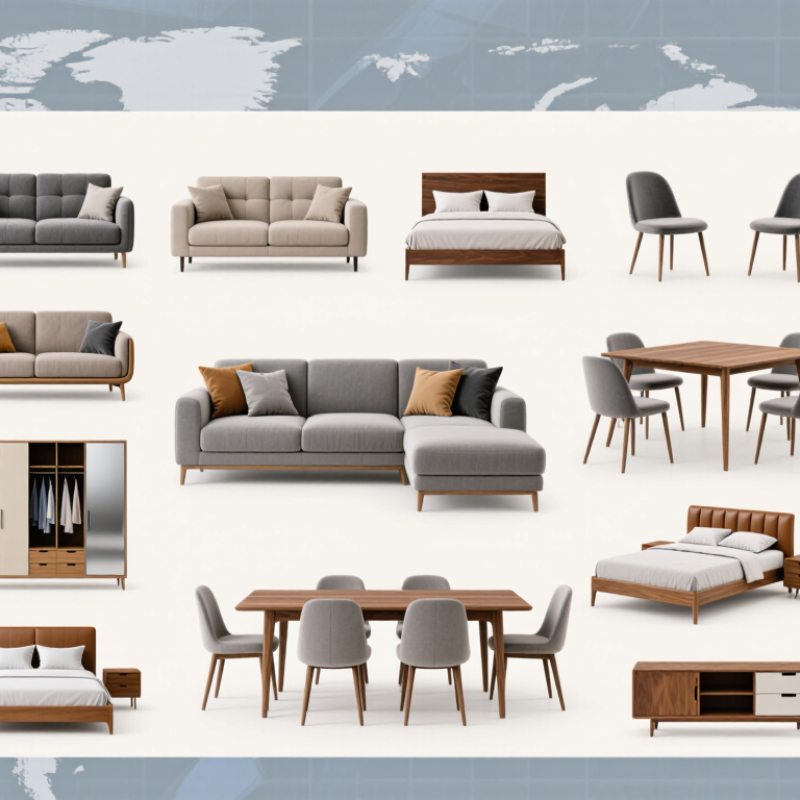
Inside furniture suppliers provide products designed for enclosed living, working, hospitality, and public spaces. Their range may include sofas, beds, dining tables, chairs, storage units, and lighting-related furniture. The term covers manufacturers, wholesalers, trading companies, and specialized workshops. It does not automatically mean a supplier controls production. Buyers should verify this difference.

The scope extends beyond product catalogs. Suppliers may support material selection, technical drawings, sampling, customization, packaging, quality inspection, and international delivery. Common materials include solid wood, engineered panels, metal, glass, fabric, and leather alternatives. Each material needs different checks. A buyer should request fire-safety data, durability tests, formaldehyde information, and documentation required in the destination market.

In supplier audits, small details often reveal operational strength. Check stitching at corners, drawer movement, weld consistency, and carton protection. Ask how defects are recorded and corrected. A polished sample can mislead. Factory controls matter more than showroom appearance. I have found that production capacity is also difficult to judge from stated figures alone. Ask for recent lead times, inspection records, and realistic monthly output. Price comparisons remain useful, but they can hide different material grades or service limits. A supplier may offer excellent design support yet struggle with stable delivery. That weakness deserves open discussion before a long-term order.


Key Criteria for Evaluating Global Furniture Suppliers

Global buyers should judge furniture suppliers beyond catalog photos and attractive prices. The real test is consistency: materials, workmanship, documentation, and communication across borders. Ask for a factory profile, production address, ownership details, and recent export references. Then verify them independently. An impressive showroom proves little. Request samples made with the same wood, fabric, foam, and finish used in bulk orders. Check joints, drawer alignment, surface odor, color variation, and packaging damage. Small flaws often become expensive at container scale.

Technical evidence should be clear and current. Review material specifications, test reports, fire-safety documents, and labeling requirements for each destination. Do not accept vague claims such as “eco-friendly” without measurable details. Confirm capacity during peak seasons, minimum order quantities, lead times, payment terms, and replacement procedures. A written warranty helps. Still, it does not replace inspection. Use a pre-shipment checklist with photographs, carton dimensions, moisture protection, and barcode accuracy. These details reduce disputes between warehouses, customs teams, and retailers.

Communication is another serious criterion. Evaluate response speed, English clarity, technical understanding, and willingness to disclose limitations. A supplier that admits a production constraint may be safer than one promising everything. That honesty matters. Compare landed cost, not unit price alone. Include freight, duties, inspection fees, storage, damage allowances, and currency risk. One overlooked charge can erase a competitive quote. Ideally, score each supplier against the same spreadsheet, but revise the scores after real samples arrive. First impressions can be wrong. Keep that possibility visible.

Top 10 Inside Furniture Suppliers for International Buyers

Top 10 Inside Furniture Suppliers for International Buyers

International buyers need more than attractive catalogs. They need stable quality, export experience, and clear documentation. Grand View Research valued the global furniture market at approximately USD 516.66 billion in 2022. Its report also forecasts a 5.2% compound annual growth rate from 2023 to 2030. This growth increases supplier choices, but it also increases comparison risks.

A practical top-ten shortlist should include suppliers with tested indoor furniture, flexible minimum order quantities, and dependable production controls. Check wood moisture levels, upholstery density, edge finishing, and hardware performance before placing large orders. The International Trade Centre shows that furniture remains a significant traded product across major global markets. Buyers should therefore review customs codes, packaging standards, and destination-country requirements early. Small errors become expensive quickly.

Look beyond factory photos. Ask for recent inspection records, material declarations, carton dimensions, and replacement policies. The 2024 Global E-commerce Report from UN Trade and Development highlights continued growth in cross-border digital trade, making remote supplier evaluation more important. Still, online evidence can be incomplete. I would not trust a perfect ranking. A video call may show a clean showroom, while production capacity remains unclear. Request samples, compare three quotations, and test assembly time. Not glamorous, but useful. Suppliers serving international buyers should explain lead times honestly, including delays during peak seasons. A ranking can guide research, yet local compliance and after-sales support deserve equal weight.

Top 10 Inside Furniture Suppliers for Global Buyers - Top 10 Inside Furniture Suppliers for International Buyers

Rank Anonymous Supplier Profile Primary Production Region Main Furniture Categories Key Material Capabilities Common Compliance Documents Typical MOQ Typical Lead Time Suitable Buyer Type
1 Profile A Eastern China Upholstered seating, sofas, lounge chairs Solid wood, plywood, steel frames, leather, performance fabric CPSIA or REACH documentation where applicable; material test reports 20–50 units per style 35–60 days Retailers, hospitality projects, private-label importers
2 Profile B Northern Vietnam Dining tables, chairs, occasional furniture Rubberwood, acacia, oak veneer, powder-coated metal FSC chain-of-custody documents when certified materials are ordered; formaldehyde test reports 50–100 units per style 45–75 days Dining furniture distributors and home furnishing chains
3 Profile C Central Malaysia Bedroom furniture, wardrobes, storage systems MDF, particleboard, laminated panels, engineered wood Panel emission reports, packaging specifications, inspection records 100–300 units per style 40–70 days Flat-pack retailers and e-commerce furniture sellers
4 Profile D Southern India Handcrafted wood furniture, cabinets, accent tables Mango wood, sheesham, reclaimed wood, brass and iron details Wood treatment records, fumigation certificates, material origin declarations 25–75 units per style 45–80 days Boutique retailers, interior designers and hospitality buyers
5 Profile E Eastern Europe Office desks, workstations, conference tables Laminated board, solid beech, steel, cable-management components EN 527 or equivalent office-furniture test documentation; load testing 30–100 units per configuration 30–55 days Commercial furniture dealers and office fit-out contractors
6 Profile F Western Turkey Upholstered beds, mattresses, bedroom seating Steel mechanisms, pine frames, foam, woven and knitted textiles Textile composition labels, flammability reports, packaging test records 50–150 units per style 35–65 days Bedroom retailers and project-based accommodation suppliers
7 Profile G Northern Italy Premium seating, occasional tables, custom interiors Leather, solid hardwood, marble, glass and metal REACH-related material declarations, leather specifications, quality inspection reports 10–30 units per style 50–90 days Premium retailers, designers and luxury hospitality projects
8 Profile H Southern Poland Modular storage, shelving, living-room furniture Engineered wood, oak veneer, HPL, aluminum fittings EN furniture-safety testing, panel-emission documentation, carton testing 50–200 units per style 30–60 days European distributors and ready-to-assemble furniture importers
9 Profile I Indonesia Outdoor furniture, rattan seating, garden tables Natural rattan, synthetic wicker, teak, aluminum and outdoor textiles FSC documentation where applicable, moisture records, outdoor-fabric test reports 30–100 units per style 45–75 days Garden retailers, resorts and outdoor-living distributors
10 Profile J North America Contract furniture, restaurant seating, custom case goods Hardwood, steel, commercial laminates, high-durability upholstery BIFMA-related testing, commercial flammability reports, indoor-air-quality documentation 10–50 units per configuration 25–60 days Restaurants, hotels, offices and commercial interior contractors

Note: Minimum order quantities and production lead times are indicative ranges commonly used for international furniture sourcing. Exact terms depend on product specifications, customization, inspection requirements and shipping arrangements.

Product Range, Quality Standards, and Customization Options

Top 10 Inside Furniture Suppliers for Global Buyers

Global buyers now compare more than catalog size. They examine range, testing, and customization before placing large orders. Fortune Business Insights valued the global furniture market at $516.66 billion in 2023, with continued growth projected through 2032. This expansion increases supplier choice, but also increases quality risk.

A dependable supplier should offer coordinated collections, including sofas, dining tables, bedroom units, storage, and occasional furniture. Product depth matters. A buyer may need matching oak-look finishes, concealed hinges, replaceable covers, and several carton sizes. Quality systems should include incoming material checks, moisture testing for solid wood, weld inspections, and pre-shipment sampling. ISO 9001 certification supports process control, but certification alone does not guarantee good furniture. Physical evidence matters more.

Ask for inspection records.

Customization should be practical and documented. Strong suppliers can adjust dimensions, foam density, fabrics, colors, packaging, and hardware without changing structural safety. For upholstered products, request abrasion results, seam photographs, and flame-resistance documentation where required by the destination market. For panels, confirm formaldehyde emissions and edge-sealing performance. Environmental claims also need traceable evidence; vague “eco” language is not enough.

One weakness remains common. Suppliers may promise flexible minimum order quantities, then reject small revisions after sampling. Buyers should approve a signed specification sheet, golden sample, tolerance range, and packaging diagram. It feels slower. It prevents expensive surprises. According to Intertek’s 2024 consumer product quality research, inconsistent specifications remain a major cause of rework and shipment delays. A careful comparison should therefore measure repeatability, not only the first attractive sample.

Top 10 Inside Furniture Suppliers for Global Buyers - Product Range, Quality Standards, and Customization Options

This reference benchmark compares typical customization lead times across major inside-furniture product categories. Global buyers commonly evaluate suppliers against standards such as ISO 9001, FSC, REACH, EN 717-1, EN 12520, BIFMA, and ISTA packaging requirements. Actual lead times vary according to order volume, materials, finishes, testing, and shipping arrangements.

Import, Pricing, and Supplier Selection Considerations

Global buyers should rank furniture suppliers by landed value, not factory price alone. Freight, duties, packaging, inspection, and payment costs can change the final number. UNCTAD’s Review of Maritime Transport 2023 noted continuing volatility in shipping markets after pandemic-era disruptions. Build three scenarios. Use current freight quotes, realistic carton dimensions, and the correct customs classification. The World Bank’s 2023 Logistics Performance Index covered 139 economies and highlighted customs, infrastructure, and delivery reliability. Port performance belongs in supplier selection.

For a top-ten shortlist, request quotations with material grades, tolerances, minimum order quantities, lead times, and Incoterms 2020. Compare EXW, FOB, and DDP carefully; their risk and cost allocations differ. Ask for recent production photos, inspection records, and sample approval procedures. Independent testing matters. Durability claims should match recognized furniture safety and chemical-emission requirements in the destination market. Supplier references help, but they are not proof. Verify factory capacity during peak season.

Pricing should be tested against landed cost per sellable unit, including damage allowances and replacement parts. UN Comtrade trade data can reveal import values and supplier-country patterns, but it cannot confirm workmanship. That limitation is easy to miss. Payment terms deserve equal attention. A deposit may improve factory scheduling, yet it increases buyer exposure before inspection. Currency changes can quietly erase a narrow margin. A low quote still attracts attention. It may hide thin packaging, weak after-sales support, or optimistic lead times. Leave room for doubt, and document every assumption before signing.