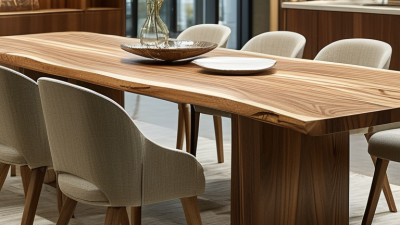
China has become a major sourcing base for made furniture, serving retailers, hospitality groups, and interior brands worldwide. Its factories produce solid wood tables, upholstered seating, bedroom collections, office systems, and custom pieces. However, production scale does not automatically guarantee dependable quality. Buyers must examine materials, joinery, finishing, packaging, and factory communication.
Dieter Rams, a respected industrial design authority, said, “Good design is as little design as possible.” This principle remains useful when evaluating made furniture from China. Clean lines should support comfort, strength, and practical maintenance. A dining table may look impressive online, yet its edge treatment, leg connection, and moisture resistance require closer inspection. Requesting samples can reveal uneven lacquer, weak drawer slides, or fabric color differences. Small details matter.
Reliable manufacturers usually provide clear material specifications, production drawings, inspection procedures, and realistic lead times. They should explain wood moisture levels, panel construction, foam density, hardware brands, and carton protection. Certifications and testing documents also deserve verification. A factory visit or independent inspection adds valuable evidence. It cannot replace good judgment.
No supplier is perfect. Delays happen. Finishes may vary slightly between batches. Even experienced buyers can overlook packaging risks or changing export costs. The strongest partnerships respond openly when problems appear. They correct root causes instead of hiding defects.
This guide introduces China’s top made furniture manufacturers for global buyers. It focuses on craftsmanship, production capability, customization, communication, and long-term reliability. The goal is not to praise every factory. It is to help buyers compare evidence, ask sharper questions, and choose with fewer expensive surprises.

China has become a major force in the global furniture manufacturing industry. Its advantage is not limited to lower production costs. Manufacturers support large-scale output, flexible customization, and coordinated supply chains. In one production cycle, a factory may cut panels, apply finishes, assemble frames, and pack containers under one roof. This structure helps global buyers manage varied projects, from hotel interiors to retail fixtures. Yet scale can hide weaknesses. Quality may vary between samples and mass production without careful controls.
Experienced buyers usually assess more than factory photos. They review material specifications, moisture resistance, load testing, finish samples, and packaging methods. A reliable manufacturer should provide clear drawings, production milestones, and inspection records. Independent checks can confirm dimensions, surface quality, hardware performance, and carton strength before shipment. China’s manufacturing ecosystem also offers engineered wood, metal, glass, upholstery, and automated equipment. This combination supports practical design changes. However, rushed customization can create costly errors. In practice, a precise approved sample is often more valuable than a long promise.
Tips: Define tolerances in writing. Ask for batch photos. Confirm fire and material requirements for the destination market. Check whether certificates match the actual product, not an older model. Keep communication technical and simple. Leave time for rework; factories, like buyers, are not perfect.

China’s furniture manufacturers serve global buyers across several practical categories.
Living room collections often include sofas, lounge chairs, coffee tables, and storage units.
Bedroom production covers beds, wardrobes, nightstands, and compact dressers.
Dining lines commonly feature tables, dining chairs, sideboards, and bar furniture.
Office factories produce desks, ergonomic chairs, filing cabinets, and meeting tables.
Material selection changes with each category. Solid wood suits premium tables and bed frames, while engineered panels support consistent cabinet production. Metal frames add strength to office and outdoor furniture.
Upholstery requires careful checks for stitching, foam density, colorfastness, and fire-safety requirements in the target market. Experienced buyers should request drawings, material samples, load tests, and packaging photographs. Small details matter. A weak corner protector can damage an otherwise excellent table during shipping.
Tips:
Define measurements in millimeters. Confirm moisture standards for wood.
Ask for carton drop-test results. Review finish samples under natural light.
Factory visits can reveal workflow, storage conditions, and quality-control habits.
Still, inspections are not perfect. I have seen approved samples differ slightly from mass production. Therefore, use a pre-shipment inspection and keep agreed specifications in writing.
Allow time for corrections. Rushed production often creates uneven gaps, loose hardware, or inconsistent upholstery.
China Top Made Furniture Manufacturers for Global Buyers
How to Evaluate China’s Furniture Suppliers
Evaluating a Chinese furniture supplier requires more than comparing online prices. Request a factory profile, production photos, material specifications, and recent export references. During a factory visit, inspect timber storage, cutting equipment, finishing areas, and packaging lines. Dust on work surfaces may reveal weak housekeeping and poor process control. Small details matter.
Order a sample before discussing large-volume production. Check joint strength, surface consistency, drawer alignment, odor, and packaging damage. Ask whether the sample uses the same materials as mass production. Some suppliers present excellent samples but change hardware or board quality later. I learned this the hard way. A written sample approval can reduce that risk.
Reliable suppliers explain their quality system clearly. Ask for inspection records, product test reports, worker safety procedures, and material traceability documents. Confirm whether production follows the destination market’s furniture safety requirements. Contact references directly, and compare delivery records with contract promises. Payment terms also deserve attention; unusually low prices may hide weaker materials or rushed finishing. Leave room for independent inspections before shipment. Even experienced buyers can miss moisture problems when checking furniture under bright showroom lights. Evaluate communication, too. Clear answers, prompt updates, and honest limitations often indicate stronger long-term cooperation.
| Evaluation Dimension | Practical Benchmark | Evidence Global Buyers Should Request | Common Risk Signals |
|---|---|---|---|
| Factory Capability | Verified production site Dedicated facilities for the required furniture category |
Factory address, production-line photographs or video, equipment list, workforce information, monthly capacity, and an independent factory-audit report. | Only a trading-office address, inconsistent factory information, or refusal to permit a remote or third-party audit. |
| Product Specialization | Relevant category experience Demonstrated capability in the buyer’s product type |
Technical drawings, previous non-confidential project references, material samples, production photos, and a portfolio covering similar construction methods. | A broad catalogue with no clear manufacturing specialization or inability to explain construction details. |
| Quality Management | Documented inspection process Incoming, in-process, and final inspections |
Quality-control plan, inspection checklists, defect-classification rules, approved sample, corrective-action records, and pre-shipment inspection results. | Quality is checked only at the end of production, or acceptance standards are not written into the purchase contract. |
| Material Compliance | Traceable materials Compliance matched to the destination market |
Material specifications, test reports for panels, coatings, textiles, foam, glass, and hardware, plus documentation for restricted substances where applicable. | Unclear material grades, expired reports, reports for a different product, or certificates that cannot be independently verified. |
| Product Safety | Destination-market testing Safety requirements defined before production |
Applicable strength, stability, flammability, chemical-emission, electrical, or mechanical-safety test reports based on the destination country and product category. | Generic certificates with no model number, no test standard, or no connection between the tested sample and the ordered product. |
| Customization Capability | Controlled OEM/ODM process Clear engineering and sample approval stages |
NDA process, technical drawing review, prototype schedule, bill of materials, change-control procedure, sample sign-off, and tooling ownership terms. | Verbal specifications, uncontrolled design changes, or production beginning before the final sample is approved. |
| Minimum Order Quantity | Usually product-specific Confirm by material, finish, and customization level |
A written quotation showing minimum quantities by model, color, finish, packaging configuration, and any tooling or setup fees. | A low headline MOQ that increases substantially after adding custom dimensions, colors, packaging, or special materials. |
| Lead Time | Typically 30–90 days Varies by product complexity and order size |
Production schedule showing sample time, material-procurement time, manufacturing time, inspection time, and estimated shipping handover date. | An unusually short promise without material confirmation, capacity planning, or a defined late-delivery remedy. |
| Pricing Transparency | Comparable landed-cost basis All major cost elements identified |
Itemized quotation covering product price, packaging, tooling, testing, inspection, inland transport, export documentation, and the selected delivery term. | A low unit price that excludes packaging, compliance testing, accessories, or other mandatory export costs. |
| Packaging and Freight Readiness | Export-oriented packaging Protection designed for container transport |
Packaging specification, carton dimensions, drop-test or compression-test results where relevant, pallet details, container-loading plan, and shipping marks. | Insufficient edge protection, excessive empty space, unclear carton labels, or no plan for moisture and impact protection. |
| Export Documentation | Complete shipment file Documents prepared before dispatch |
Commercial invoice, packing list, bill of lading instructions, certificate-of-origin requirements, product declarations, and any destination-specific documents. | Incorrect product descriptions, inconsistent quantities, delayed documents, or lack of experience with the destination customs process. |
| Communication and Engineering | Fast, precise technical response Dedicated project contact recommended |
Response-time expectations, bilingual specifications, meeting records, revision history, escalation contact, and confirmation of time-zone coverage. | Repeated misunderstandings, unanswered technical questions, or sales commitments that are not confirmed by the engineering team. |
| Payment and Contract Controls | Milestone-based protection Terms linked to verifiable deliverables |
Signed purchase contract, approved specifications, payment milestones, inspection rights, warranty terms, defect remedies, intellectual-property clauses, and dispute-resolution terms. | Requests for full payment before production evidence, payment-account changes by email only, or missing remedies for nonconforming goods. |
| After-Sales Support | Written warranty and claims process Replacement parts and corrective action defined |
Warranty duration, exclusions, spare-parts policy, claim-response time, photo or video evidence requirements, and procedure for replacement or credit. | No written warranty, unclear responsibility for transit damage, or no available spare-parts and repair process. |
| Sustainability and Traceability | Documented environmental practices Claims supported by product-level evidence |
Wood or material sourcing records, waste and emissions policies, recycled-content documentation where claimed, and supplier-code-of-conduct records. | Broad environmental claims without chain-of-custody information, product-specific evidence, or measurable policies. |
Sourcing furniture from China starts with a clear product brief, not a vague request for “good quality.” Define dimensions, wood species, fabric grades, finish, packaging, target quantity, and delivery port. Experienced buyers also prepare drawings and reference photos. A factory can quote faster when details are measurable. Ask about production capacity, export experience, quality controls, and material documentation. Do not rely on polished showroom images alone. I once underestimated carton strength; a beautiful cabinet still arrived damaged when packaging was weak.
Tips: Compare at least three qualified manufacturers. Request a sample before placing a bulk order. Check joints, drawer movement, surface consistency, odor, and label accuracy. Confirm lead time in writing, including approval, production, and inspection stages. A video call can reveal machinery and workshop conditions, but an on-site inspection offers stronger evidence. Keep payment terms and revision rules documented. Small omissions become expensive later.
After sample approval, use a signed specification sheet for every production detail. Independent inspection before shipment can verify quantity, dimensions, moisture levels, color, and packing. Buyers should calculate freight, duties, storage, and possible rework, not only the factory price. Communication may feel efficient until time zones or translation create confusion. Use simple sentences and numbered photos. Leave room for correction. No sourcing plan is perfect, and honest review after each shipment improves the next order.
China Top Made Furniture Manufacturers for Global Buyers
Global buyers need more than attractive furniture. They need evidence, consistency, and practical support. Experienced manufacturers should provide factory photos, production records, material declarations, and inspection reports. Reliable teams explain wood moisture, panel density, coating performance, and load limits clearly. Ask for samples before approving a large order. A sample can reveal uneven edges, weak joints, or color variation that photos hide. It happens.
Compliance begins with the destination market. Confirm chemical restrictions, fire requirements, labeling rules, packaging standards, and required product tests before production. Request current reports from accredited laboratories, not copied files. Factory audits can examine worker safety, material traceability, and corrective actions. However, paperwork cannot prove every shipment is identical. Independent pre-shipment inspection remains valuable, especially for mixed containers. Experienced buyers learn this point slowly.
Reliable logistics depends on small details. Confirm carton dimensions, container loading plans, shipping terms, port arrangements, and realistic lead times. Use moisture barriers, corner protection, and clear handling labels for long-distance transport. Ask suppliers to photograph sealed cartons and container loading. Delays still occur. A port closure, damaged pallet, or late approval can change the schedule. Build a reasonable buffer instead of promising an exact arrival date. Keep written records of defects, replacement terms, and claims deadlines, because verbal assurances may not protect either side.
Quality, Compliance, and Logistics Context for Global Buyers
China’s 2023 World Bank Logistics Performance Index component scores show a strong logistics environment for international furniture sourcing, particularly in timeliness, infrastructure, tracking, and logistics competence. These scores describe the national logistics context and do not represent individual manufacturers or brands. Source: World Bank, Logistics Performance Index 2023.