A Skincare Pump is more than a small actuator above a bottle. It meters formula, limits messy contact, and has to keep working from the filling line to the final press at home. For global buyers, those details affect product protection, user experience, and supplier risk. The market is growing, but pump performance still depends on practical checks: dose consistency, closure fit, material compatibility, and repeatable output. A pump that looks refined can still sputter when paired with a thick cream. Small details matter.
Grand View Research valued the global cosmetic packaging market at US$34.4 billion in 2023 and forecast 5.4% annual growth from 2024 to 2030. That figure covers cosmetic packaging broadly, not skincare pumps alone, so it should not be read as a pump-market estimate. Packaging educator Walter Soroka describes packaging as “the science, art, and technology of enclosing or protecting products for distribution, storage, sale, and use.” For pump buyers, that principle is tangible: a bottle may face vibration in transit, temperature changes in storage, and repeated use beside a bathroom sink. This guide compares manufacturers through the factors that matter in those conditions, including dispensing precision, customization, production capability, and quality controls. Supplier claims are useful, but they are not test results. Ask for samples. Test them with your actual formula. That step is easy to overlook.
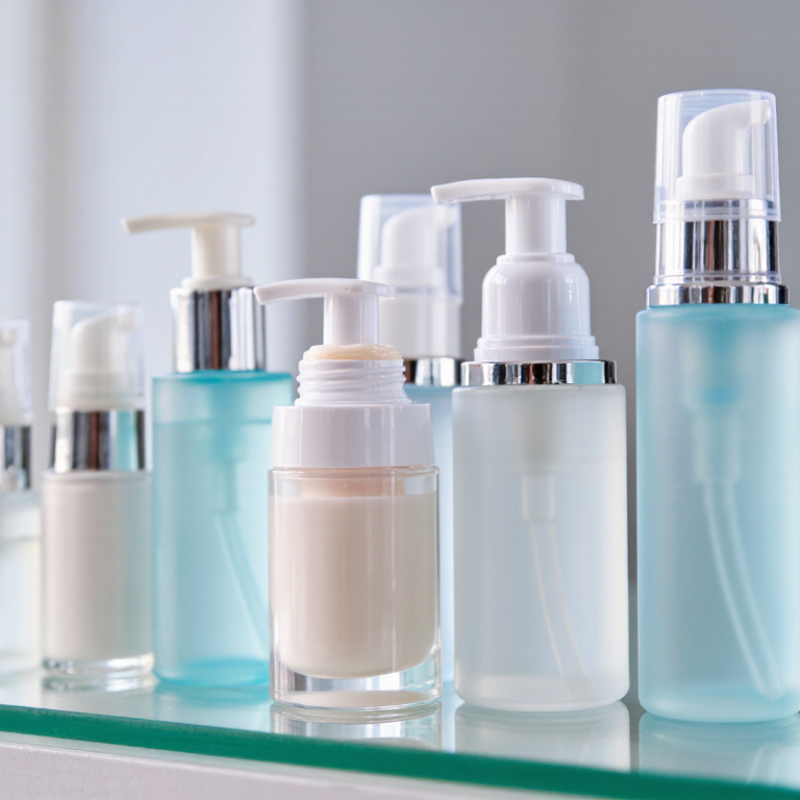
A skincare pump is more than a dispenser; it helps protect the product and makes daily use predictable. Each press should deliver a reasonably consistent dose without requiring excessive force. That matters when someone applies a light serum with one hand or uses a richer lotion after washing. Small details matter.
The pump’s parts must suit the formula. Viscosity, oils, and suspended ingredients can affect how smoothly a product travels through the dip tube and nozzle. A formula that works in a jar may clog a narrow outlet or leave residue around the actuator. Packaging teams should test the actual product, not just water. Check priming, dose consistency, leakage, and how much product remains in the bottle. A few test cycles are not enough; repeated use can reveal sticking or changes in output.
The container also shapes the experience. A stable base is easier to press on a bathroom counter, while a locking clip can help prevent accidental discharge during transport. Airless designs may reduce repeated exposure to air, but they are not automatically suitable for every formula. Compatibility testing still matters. Sometimes the simplest pump performs best, though that can be less impressive in a product photograph.

Lotion pumps work well with everyday creams and cleansers. Their wider dip tubes and spring-driven chambers handle medium-viscosity formulas, while a lockable head helps prevent leaks during shipping.
Fine-mist pumps suit watery toners and facial sprays, producing a light, even veil rather than a heavy stream. Dose matters. A spray actuator that works with water-thin toner may sputter when the formula contains more oils or thickeners.
Treatment pumps dispense smaller amounts for serums and concentrated lotions. Airless designs can limit repeated contact with air and help evacuate product, though they are not automatically compatible with every formula.
Cosmetics Europe’s 2024 market report recorded €96 billion in European cosmetics and personal-care sales for 2023, with skincare representing 27.8% of the market. That scale makes pump choice a practical packaging decision, not merely an aesthetic one.
Test the formula. Check priming, dose consistency, and residue on the nozzle after several days. A pump can look precise on a sample table and still clog in daily use; viscosity and dispensing tests matter more than appearance.
Skincare pump design begins with the formula and the way people use it. A light lotion needs a different pump action from a thick cream. Engineers consider viscosity, bottle-neck dimensions, dose size, and how much product remains after use. They select a spring, piston, gasket, and dip tube to suit those conditions. Small changes matter. A tube cut too short may leave product in the bottle; one that bends can interrupt dispensing.
Before production, manufacturers build prototypes and test them with the intended formula. They check whether each press delivers a consistent amount, whether the pump leaks during storage, and whether the actuator returns smoothly. Materials also need compatibility testing, since some formulas can affect seals or plastic parts over time. The test results guide adjustments to component shape and fit. Real use can reveal issues that a drawing misses.
Production typically combines precision molding with automated or carefully controlled assembly. Teams inspect dimensions, operate sample pumps, and check filled containers for leakage. Clean handling helps protect the product and its packaging. Not every first design works well. A pump may feel stiff, or dispense unevenly when nearly empty. A detail can still be missed. Manufacturers should record those failures and revise the design, rather than treating a successful factory sample as proof of dependable performance.
A reliable skincare pump should dispense a steady dose without clogging, leaking, or leaving too much product behind. Ask manufacturers for dose-volume data and test pumps with your actual formula, not just water. Thick creams and lightweight serums behave differently. Check whether the pump works after repeated use and whether it can be locked for shipping. Watch the dip tube length, actuator feel, and amount of product remaining in the bottle. Small details matter.
Material compatibility deserves careful review. Request specifications for parts that contact the formula, along with relevant test reports and quality-control procedures. Ask how the manufacturer checks spring function, output consistency, and leakage during production. Then compare sample results across multiple units, not just one. No checklist is perfect. A polished sample can still differ from routine production, so ask about batch controls and how defects are handled. Review production capacity, minimum order quantities, lead times, and packaging options before committing. Clear answers and documented processes are stronger signals than confident promises, though no supplier can remove every risk. Include your target dose, bottle dimensions, and formula type in the inquiry to make comparisons more meaningful.
| Evaluation Dimension | What to Assess | Useful Evidence or Test | Buyer Evaluation Guidance |
|---|---|---|---|
| Formula compatibility | Whether pump materials and product-contact parts suit the skincare formula, including its oils, solvents, viscosity, and active ingredients. | Compatibility testing using the intended formula and packaging assembly; check for leakage, swelling, cracking, discoloration, odor, or changes in pump function. | Request test conditions and results for the actual formula. Compatibility can vary by formula and component material. |
| Dispensing performance | Output per actuation, consistency across repeated strokes, priming behavior, and suitability for the product’s viscosity. | Ask for the nominal dosage, measurement method, sample results, and performance after repeated dispensing. | Compare samples against the target dose and acceptable variation agreed for the product; do not rely on nominal output alone. |
| Leakage and closure | Resistance to leakage during storage, handling, and shipment, including when the pump is locked or fitted with a protective cap. | Review documented leak tests and sample the finished pack in the intended orientation and transport conditions. | Confirm the test setup, duration, and acceptance criteria. A test result applies to the tested pack configuration. |
| Material and component information | Materials used in the actuator, dip tube, bottle interface, seals, and other product-contact components. | Request a component and material specification, including material identification for plastics and metal parts where applicable. | Check that documentation covers the complete assembly and matches the production sample; material selection alone does not establish formula compatibility. |
| Quality management | Documented controls for production, inspection, nonconforming parts, traceability, and corrective actions. | Review the supplier’s quality-management documentation, inspection records, and relevant audit or certification scope. | Verify the certificate issuer, validity, and scope if certification is claimed; assess production controls separately from certification status. |
| Production capacity and continuity | Ability to meet forecast demand, handle repeat orders, and communicate capacity constraints or supply interruptions. | Request a capacity statement, production schedule assumptions, and a documented continuity or contingency plan. | Compare stated capacity and lead time with the buyer’s forecast and launch schedule. Confirm figures in a current quotation. |
| Customization and tooling | Options for actuator shape, output, color, dip-tube length, decoration, and custom tooling. | Review drawings, sample parts, tooling terms, color approval process, and change-control procedures. | Clarify ownership, maintenance, replacement, and approval requirements for any custom tooling before placing an order. |
| Regulatory and market documentation | Availability of material, safety, and product documentation needed for the buyer’s target markets and intended use. | Request applicable declarations, test reports, and supporting technical documents; confirm their scope and revision dates. | Requirements vary by market and product. Have the responsible compliance team confirm which documents apply. |
| Sustainability and end-of-life design | Material choices, component separability, recycled-content claims, and compatibility with relevant local collection and recycling systems. | Request component-level material information and substantiation for any recycled-content or recyclability claim. | Evaluate the complete pack, not just the bottle. Pumps can combine multiple materials that may affect sorting and recycling. |
| Commercial terms and service | Minimum order quantity, lead time, sample availability, payment terms, complaint handling, and after-sales support. | Compare current written quotations, sample timelines, service contacts, and stated procedures for quality claims. | Record each term in the purchase agreement; minimum quantities and lead times are supplier- and order-specific. |
Global buyers comparing skincare pump manufacturers should start with the formula and dispensing needs, not a catalogue photo. Check output per stroke, nozzle shape, bottle-neck fit, and whether the pump handles the product’s viscosity. Ask for material specifications and sample units from the intended production process. A pump that works with water may behave differently with a thick cream.
Test samples using the actual formula. Record how many strokes are needed to prime each pump, then check dispensing consistency and leakage after storage on its side. Small details matter. Request documented quality checks, batch traceability, and clear procedures for handling design or material changes. A polished sample is not enough; production units can vary, so agree on acceptance criteria before placing a large order.
Sourcing plans should include tooling costs, minimum order quantities, lead times, packaging, and freight—not just unit price. Ask suppliers how they manage capacity during busy periods and what happens when a shipment misses its schedule. Compare written quotes on the same specifications. I would not call a lower price a saving until reject rates and replacement timelines are considered. Forecast demand with some flexibility; even careful estimates can be wrong.
Compare packaging materials when assessing pump and pack options for the EU market. These are EU minimum recycling targets by material weight, not product-specific requirements for skincare pumps. Source: Directive 94/62/EC, as amended by Directive (EU) 2018/852.