China Top Spring Jackets Men Manufacturers for Wholesale?
China’s springwear supply base offers buyers a wide range of options, but a polished catalog is only the starting point. For Spring Jackets Men, the real test is whether a manufacturer can match fabric, fit, workmanship, and delivery expectations across repeat orders. A jacket may look convincing under showroom lights. The seams, zipper, and lining tell a fuller story.
In this guide, apparel sourcing specialist Daniel Wu offers a practical principle: “A dependable spring jacket starts with clear specifications, not a low quote.” Buyers should compare material details, sample quality, available sizing, customization capabilities, and production communication. Ask how the supplier handles revised samples and checks consistency between approval and bulk production. Those answers matter. So does the small print in a quotation, including what is—and is not—included.
Wholesale sourcing is rarely effortless. A sample can feel lighter than expected, or a color can shift between fabric and finished garment. These are ordinary risks, not automatic reasons to reject a supplier. They do deserve clear questions and written confirmation. The manufacturers worth considering are those willing to explain their process, share relevant product evidence, and discuss realistic timelines. This overview will help buyers assess potential partners with care, while recognizing that supplier performance must be verified directly. A shortlist is useful. Due diligence is better.
Understanding Men’s Spring Jackets and Their Wholesale Market
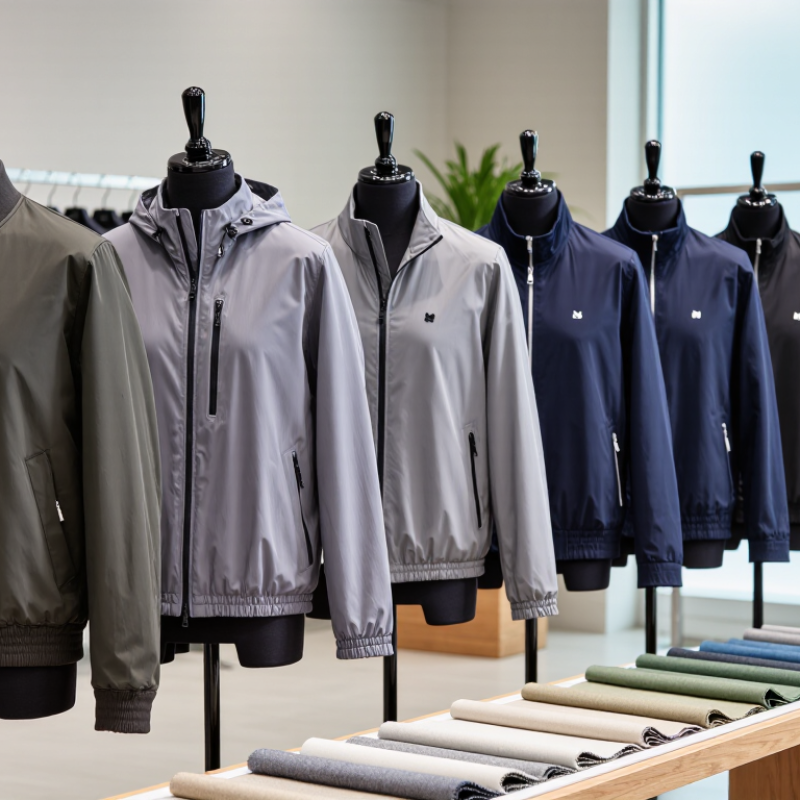
Men’s spring jackets sit between winter protection and summer weight. Buyers usually compare shell fabric, lining, water resistance, pocket placement, and size consistency. A light cotton twill jacket suits mild days; a lined polyester shell can handle wind and brief showers. Small details matter. Check zippers and seams on samples, then compare measurements across sizes before placing a bulk order. Fit can vary more than expected.
The wholesale market follows wider apparel conditions, but seasonal demand is local. Grand View Research estimated the global apparel market at about US$1.74 trillion in 2023, with projected annual growth of 2.8% from 2024 to 2030. This broad figure is not a forecast for spring jackets alone. It does, however, show the scale of the market buyers serve. McKinsey and The Business of Fashion’s State of Fashion 2024 also described subdued growth expectations, making careful stock planning important. Regional weather, retail calendars, and price points can matter more than a global average.
For sourcing, ask manufacturers about fabric composition, sample lead time, minimum order quantity, and repeat-order consistency. Request measurements in centimeters and confirm tolerances in writing. A lower unit price may not help if colors differ between batches or delivery misses the selling season. I would not assume every “water-resistant” finish performs alike; ask how it is tested and maintained. Wholesale decisions are not perfectly predictable. Start with a focused range, and review sell-through before expanding.
China’s Manufacturing Regions and Production Capabilities
China’s spring-jacket production is spread across several manufacturing regions, each with different strengths. Zhejiang, including Ningbo and nearby apparel clusters, has experience with woven outerwear, lining, and garment finishing. Jiangsu offers established textile and sewing networks, while Guangdong is known for flexible sourcing and a broad range of fabric options. Fujian also has active apparel production, though capabilities vary between factories. The region matters, but the individual factory matters more.
Many manufacturers can handle lightweight polyester or nylon shells, mesh linings, zipper installation, and basic water-repellent finishes. Some can develop custom patterns and produce small pilot batches before larger orders. Ask for a sample made with the intended fabric and trims. Check seam alignment, pocket depth, zipper movement, and how the jacket feels over a shirt. Production capacity figures can be optimistic. Confirm lead times, minimum quantities, and inspection steps in writing; even then, schedules may shift during busy seasons. A missed detail can become expensive.
Tips: Request a recent sample, fabric specifications, and a clear production timeline. Compare factories by actual workmanship, not location alone. Small checks help. Don’t assume every supplier offers the same finishing quality.
China’s Spring Jacket Manufacturing Regions: Regional Scope and Capabilities
How to read this chart: The bars show the number of provincial-level regions in each macro-region defined by China’s National Bureau of Statistics—not jacket output or factory counts. For sourcing, coastal clusters such as Guangdong, Zhejiang, Jiangsu, and Fujian are commonly associated with apparel and textile production, while supplier capabilities vary by factory. Confirm jacket-specific experience, materials, capacity, and quality controls directly with prospective manufacturers.
Source: National Bureau of Statistics of China regional classification. Counts are East 10, Central 6, West 12, and Northeast 3.
How Wholesale Jacket Manufacturers Manage Orders
Wholesale spring jacket orders need more than a quantity and delivery date. Manufacturers usually confirm fabric, lining, color, size range, labels, and packing details before production. A written order sheet helps prevent small differences, such as a matte zipper becoming a polished one. Details matter. Buyers should also agree on sample approval, minimum quantities, payment milestones, and acceptable tolerances. A clear timeline should include fabric sourcing, cutting, sewing, inspection, and dispatch, with room for delays in material supply.
During production, a reliable manufacturer shares progress at agreed checkpoints rather than waiting until cartons are packed. Updates may include fabric arrival, line start, and inspection results.
For example, a buyer can request photos of stitching and measurements from a random size set. These checks do not replace an independent inspection, but they can reveal issues early.
Changes after approval are possible, though they may affect cost or timing. That part is often underestimated. Even experienced teams can miss a detail, so keep decisions in writing and confirm revised dates.
Before shipment, verify carton counts, size ratios, packing lists, and shipping marks against the order. A practical process is not perfect; it makes problems visible while there is still time to respond.
Key Factors for Evaluating Chinese Suppliers
When evaluating Chinese spring jacket suppliers for wholesale, look beyond polished product photos. Request a physical sample and check the details buyers notice: zipper movement, seam alignment, lining attachment, and pocket depth. Ask for a written specification covering fabric weight, insulation, color tolerance, size grading, and acceptable defect levels. Confirm whether the factory makes the jackets itself or outsources production. That distinction can affect quality control and delivery promises. Ask for recent inspection records, testing documents relevant to the materials, and a clear process for handling failed checks. Small details matter.
Material claims deserve scrutiny. Textile Exchange’s Materials Market Report 2024 estimates global fiber production reached 124 million tonnes in 2023, with polyester accounting for about 57 percent. For a jacket using recycled polyester, ask for transaction-level documentation and verify that the paperwork matches the actual fabric lot. Logistics also need a reality check: the World Bank’s Logistics Performance Index 2023 ranked China 19th among 139 economies, but that national score cannot guarantee an individual shipment’s timing. Get a production calendar with sample approval, cutting, sewing, inspection, and dispatch dates. A supplier’s first estimate may be optimistic. I would still ask what happens when fabric arrives late.
Steps for Sourcing and Ordering Spring Jackets in China
Sourcing and Ordering Spring Jackets in China
Start with a clear tech pack: shell fabric, lining, zipper type, color references, size range, and target delivery date. Spring styles often need lightweight, water-resistant materials, so request fabric swatches before approving a sample. Ask each manufacturer for its minimum order quantity, sample fee, production lead time, and inspection process in writing. China Customs data reported textile and apparel exports of about US$301.1 billion in 2024, showing the scale of the sector, but export capacity does not guarantee a suitable factory. Verify recent jacket samples and confirm who handles fabric sourcing.
Approve a pre-production sample before bulk cutting. Check seam strength, zipper operation, pocket placement, and color under daylight. Set measurable tolerances for measurements and defects in the purchase order. Allow time for revisions and shipping; a small sample can look right while bulk fabric behaves differently. That detail is easy to underestimate.
Tip: Request a dated production schedule with fabric booking, sample approval, cutting, sewing, and final inspection milestones. Keep written records of every change.
One caution: forecasts can slip, so avoid promising a retail launch based only on the factory’s earliest estimate.
