China’s tile and ceramics sector offers buyers a wide range of Tile Photo Frame options, from simple glazed borders to custom pieces with textured surfaces. A well-made frame should do more than look attractive. It should hold a photograph securely, sit evenly on a shelf or wall, and protect its edges during shipping. Small details matter.
When comparing manufacturers and suppliers in China, buyers can ask about tile body, glaze consistency, frame backing, mounting hardware, and available sizes. Request clear product photos, dimensions, sample options, and packaging details before placing a larger order. A close-up can reveal uneven glaze or rough corners that a polished catalogue image may hide. William Morris, a respected British designer, offered a useful design principle: “Have nothing in your houses that you do not know to be useful, or believe to be beautiful.” That idea suits this product: decorative appeal should not come at the cost of practical use.
This guide introduces China-based Tile Photo Frame manufacturers and suppliers, with attention to product styles, customization, quality checks, and communication. Supplier claims still need verification. A sample may differ from bulk production, and handmade finishes can vary slightly. Buyers should confirm specifications in writing and inspect samples where possible. Not every variation is a flaw, but expectations should be clear before production begins.
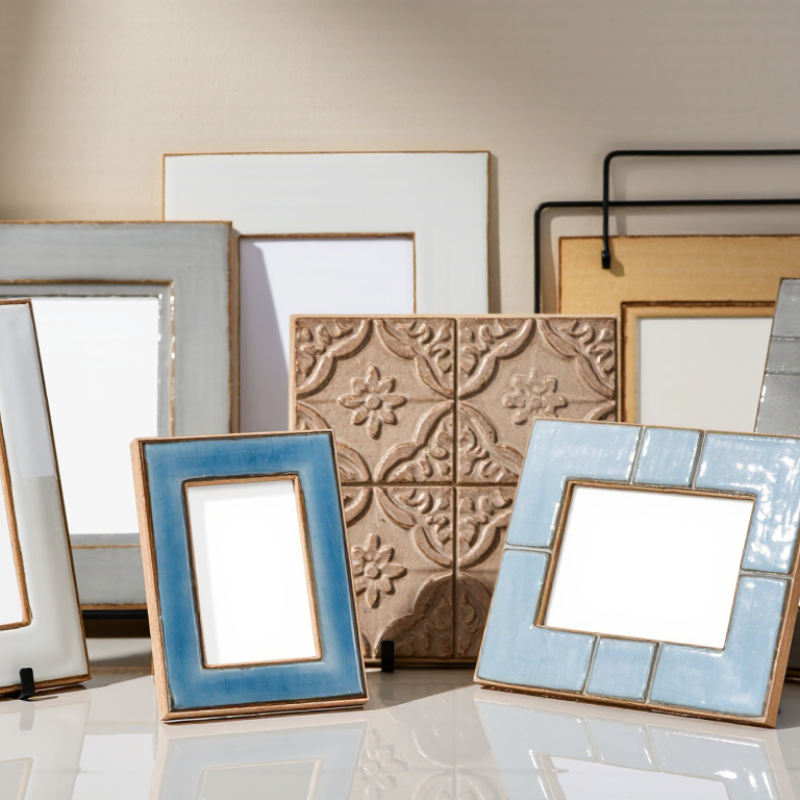
A tile photo frame uses ceramic or porcelain as its visible face or backing, with a photograph set into a recess or attached to the surface. The tile brings a firm, cool-to-touch finish and may feature printed artwork, glazed color, or a matte texture. On a desk, its weight can help it stay steady. It may also chip if dropped onto a hard floor.
Standard frames typically protect photos with glass or acrylic and use a wood, metal, or plastic border. Tile frames vary: some place the image directly on a coated tile, while others use a separate photo insert. Ask the supplier how the image is sealed and whether the frame has a stand, wall fitting, or both. These details affect cleaning, glare, and photo replacement.
The difference is practical as well as visual. Tile can suit shelves or kitchens where a solid, easy-to-wipe surface is useful. A standard frame is often easier to open and update. Still, tile is not automatically better. A glossy finish may reflect a nearby window, and a heavy frame needs stable support. Small details matter. Check the image area, edge finish, and backing before choosing.
| Comparison dimension | Tile photo frame | Standard photo frame | Practical note for buyers |
|---|---|---|---|
| What it is | A photo display that uses ceramic or porcelain tile as a visible frame element, backing, or decorative surround. | A photo display generally made with a conventional frame moulding, a glazing panel, a backing, and a photo opening. | Confirm whether the tile is the frame border, the photo-printing surface, or part of the backing; product designs vary. |
| Main materials | Typically ceramic or porcelain components, often combined with a backing, adhesive, or separate support. | Common frame materials include wood, metal, and molded plastics; glazing and backing materials depend on the design. | Ask for the material specification for every component, not just the visible surface. |
| Appearance and finish | May have a glazed, printed, textured, or patterned ceramic surface. Gloss and color can vary with the finish and production process. | Appearance is usually defined by the frame material, profile, coating, stain, or surface wrap. | Request a finished sample to check color, surface texture, image placement, and edge quality. |
| Weight and handling | Ceramic and porcelain parts are rigid and can be more vulnerable to impact damage than many lightweight frame materials. | Weight varies by material and size; some wood, metal, or plastic designs are relatively light. | Check the packed weight, protective packaging, and handling instructions before arranging transport. |
| Photo protection | Protection depends on whether the design includes a separate glazing panel or uses a photo printed directly onto a tile surface. | Many designs use glass or clear plastic in front of the photo, though some frames are open-front. | Clarify the photo format and whether glazing is included; these affect appearance and cleaning. |
| Mounting and display | May be designed for tabletop display or wall mounting. The mounting method depends on the frame construction and product design. | Often supplied with a stand, wall-hanging hardware, or both, depending on the model. | Verify the orientation, hardware, and intended mounting surface, especially for heavier designs. |
| Durability and care | The tile surface is generally easy to wipe, but ceramic and porcelain components can chip or crack if dropped or struck. Adhesives and backing may need separate care. | Care varies by material; wood finishes, metal coatings, plastic surfaces, and glazing may require different cleaning methods. | Request care guidance and inspect edges, joints, and backing as well as the front surface. |
| Customization options | Possible options include tile size, surface finish, color, pattern, printed artwork, and photo opening, subject to the design and production process. | Options may include frame profile, color, material, glazing, backing, and standard photo sizes. | Ask for a written specification and a pre-production sample when ordering a customized design. |
| Quality checks | Inspect tile dimensions, surface consistency, print alignment, edge condition, bonding, and fit between the tile and photo components. | Inspect frame joints, finish consistency, glazing condition, backing fit, and the operation of stands or hanging hardware. | Agree on measurable acceptance criteria and packaging requirements before placing a production order. |
| Supplier information to confirm | Request material details, dimensions, finish options, customization limits, sample availability, production lead time, and export packaging details. | Request frame material, photo-size compatibility, glazing and hardware details, finish options, sample availability, lead time, and packaging details. | Compare suppliers using the same drawing, specification, sample requirements, and quality checklist. |
